Does Your Motorhome Need a Heavy-Duty Tow? How Lake County RV Calls Get Sized
A 36-foot motorhome stopped on the shoulder of US 441 is a different problem from a stopped car, and the difference is not only size. Lake County sees these calls all season: a coach that left a campground off State Road 19 and bled its air down before Eustis, or a rig that made it as far as the Tavares wye and then would not shift. The question that decides everything after that is not how long the RV is. It is how much it weighs, how it stops, and whether its drive wheels still turn freely. Here is how an RV call actually gets sized around Tavares, and what the wrong-sized truck costs you when it shows up.
Weight, Not Length, Decides Whether You Need a Heavy-Duty Tow
Weight is what sizes a tow, and for motorhomes it is the number almost nobody can quote. The U.S. Department of Energy's Alternative Fuels Data Center publishes the standard gross-vehicle-weight-rating bands and notes that the Federal Highway Administration treats Class 7 and Class 8, anything rated above 26,000 pounds, as heavy duty, with medium duty covering 10,001 to 26,000 pounds. Those brackets are what a dispatcher is sorting you into while you talk. A light wrecker built around sedans is not rated to lift an axle carrying eight tons, and nothing about that attempt is recoverable once a boom is past its limit. Length is a poor stand-in for weight, because two coaches of the same length can differ by ten thousand pounds depending on chassis, tanks and how much is aboard. Loaded weight is the figure that counts: fresh water alone runs about 8.34 pounds per gallon, so a full 100-gallon tank is roughly 830 pounds before anyone's gear goes in.
Where Your Motorhome Probably Lands
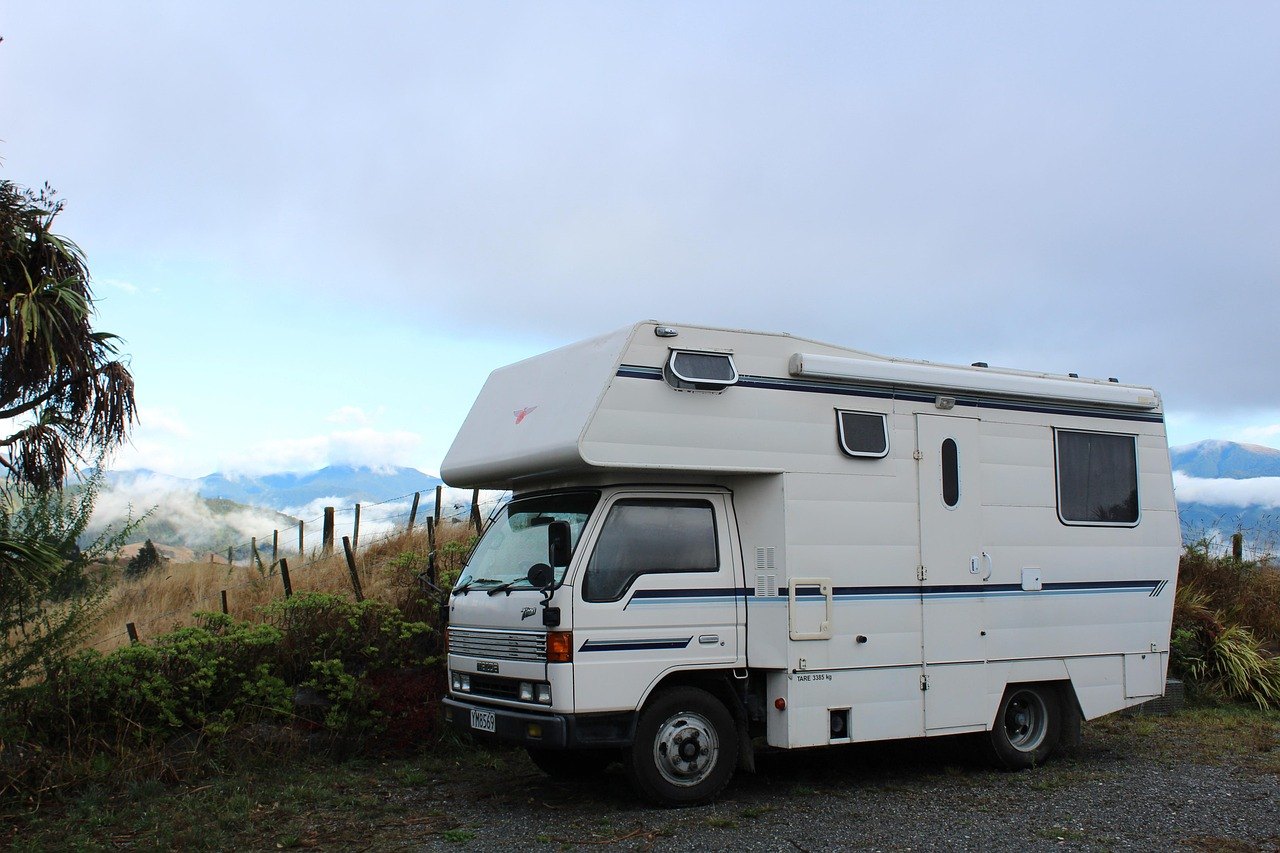
Most Class C motorhomes sit inside the medium-duty range and most Class A coaches sit above it. A Class C on a cutaway van chassis is typically rated in the low-to-mid teens of thousands of pounds, which lands it in the medium-duty bracket and within reach of a medium-duty tow. A gas Class A commonly runs into the low twenties, and a diesel pusher on a bus-style chassis clears 26,000 pounds comfortably, which is heavy-duty territory. Travel trailers and fifth wheels behave differently again, because the tow vehicle and the trailer can fail independently of each other. The practical move is to read your own GVWR off the federal certification label inside the entry door or near the driver's seat, write it down, and keep it with the registration.
What Dispatch Needs Before a Truck Rolls
- The GVWR from the certification label, or failing that the coach's class and rough loaded weight.
- Chassis type: gas front-engine, diesel pusher, or a Class C on a cutaway van frame.
- Whether the brakes are hydraulic or air, and whether the rig is still holding air pressure.
- Whether the drive wheels turn freely, or the transmission and parking brake have it locked.
- Your exact position: road, nearest cross street or mile marker, and whether you are on pavement, grass or sand.
- Whether a car is in tow behind the coach, and whether it can be unhooked and driven clear.
Stay out of the space between a disabled coach and the travel lane, and do not go underneath one on a shoulder. Motorhome air suspension can settle as pressure bleeds off, and a rig that drops two inches while someone is beneath it leaves no way out. Wait on the far side of the guardrail, or well back from the shoulder, until the truck is on scene and the coach is chocked.
Coach stopped somewhere between Tavares and the forest? Give a dispatcher the weight off the label, the chassis and the road, and the right truck can be rolling while you wait.
Call Now (352) 517-5260A Diesel Pusher Is Not Just a Very Large Pickup
The systems on a large motorhome are commercial-truck systems, and that is what changes the recovery. A diesel pusher carries its engine at the rear, drives through a heavy rear axle, and stops on air brakes rather than hydraulics. Air brakes fail safe: when pressure drops, heavy springs clamp the brakes on and hold them. That is exactly what you want on a grade and exactly what you do not want on a shoulder, because a coach that has lost its air is now a 30,000-pound object with its wheels locked. It cannot be pushed, dragged or nudged clear of a lane by hand, by a pickup, or by a strap and good intentions. Releasing those brakes means restoring air to the system or mechanically caging the spring brakes at each wheel, and both are jobs for whoever arrives carrying the right fittings, which is where a roadside assistance call ends and a recovery begins. A Class C on a van chassis is friendlier, with hydraulic brakes and a familiar driveline, but it still outweighs anything a light-duty wrecker is rated to pick up.
Most Motorhome Tow Damage Happens in the First Hundred Feet
Nearly all avoidable tow damage to a motorhome happens before the rig has moved a hundred feet, and it starts with the driveline. Freightliner, whose truck chassis underpin a large share of diesel motorhomes, publishes a towing-procedure bulletin through NHTSA that is blunt about the sequence: it instructs operators to remove all drivelines or all axle shafts before towing, warning that failing to do so can damage the transmission and other components when the rear wheels stay on the ground. The same bulletin tells operators to connect the tow truck's air supply before releasing the parking brakes so the disabled vehicle cannot suddenly roll, and warns against reeving a sling from one tow hook to another because reeving can overload the hooks and damage the vehicle. None of that is fine print. A rear axle dragged a quarter mile with the driveline still in place can turn a fuel-system call into a transmission replacement, and nothing about the damage is visible until the invoice arrives. It is also why "can you just drag it onto the grass" is the wrong question to ask on the phone.
Florida's Size Rules Shape the Recovery, Not Just the Drive
Florida caps motorhome dimensions, and those caps describe the object a tow operator has to fit down a road. Under Florida Statute 316.515, no motor home may exceed 45 feet in length excluding bumpers and safety devices, no vehicle may exceed 13 feet 6 inches in height including its load, and total outside width is held to 102 inches, with an allowance for appurtenances such as mirrors. A coach near those limits does not simply get hooked and driven off. It needs room to be lifted, swung and lined up, and it will not take a tight corner on the back of a wrecker any more gracefully than it would under its own power. Florida also separates out the heaviest class of RV in Statute 320.01, which defines a private motor coach as a unit built on a self-propelled bus-type chassis with at least three load-bearing axles. Three axles is a useful tell on the shoulder: if your rig carries a tag axle behind the drive axle, you are in the heaviest bracket, and the lightest truck that can help you is a heavy wrecker.
Lake County Strands RVs in Three Predictable Places
Most Lake County RV calls come off a short list of roads, and the road changes what the recovery looks like. State Road 19 runs concurrently with US 441 from Eustis down to a wye in Tavares, where SR 19 splits away south toward Howey-in-the-Hills. That is a merge-heavy stretch, and a coach that loses power there has nowhere wide to put itself. North of town the picture inverts. SR 19 holds four lanes through Dona Vista, then narrows to two lanes at Umatilla and runs on through the Ocala National Forest past Lake Dorr and Salt Springs, which is where most of the campground traffic is pointed. Two lanes, no usable shoulder and forest on both sides means a stopped motorhome blocks a travel lane outright, and the job becomes traffic control as much as towing. The third pattern is water. US 441 and SR 44 widen to six lanes between Lake Harris and Lake Eustis and cross the Dead River on a bridge, and south of Tavares SR 19 crosses the Howey Bridge over Little Lake Harris. A bridge deck gives you no shoulder at all, which is why the standing advice is to keep rolling to the far side if the coach will still move under its own power.
The One Number That Decides the Truck
If you take one thing off this page, make it the GVWR on your certification label. That number sorts your coach into medium-duty or heavy-duty before anyone argues about length, and it decides whether the truck that arrives can finish the job or has to call for a second one. Photograph the label this week and keep it on your phone with the chassis type and your axle count. Then, when something does go wrong, you can answer the only three questions that matter in the first minute: how heavy, what kind of brakes, and does it still roll.
When a coach stops somewhere between Tavares and the forest, the call worth making puts equipment rated for the weight on scene the first time. Tavares Towing runs heavy-duty towing for diesel pushers and private motor coaches, and medium-duty towing for Class C rigs and lighter coaches.
Motorhome Stopped on 441 or 19?
Read us the GVWR off your certification label, tell us the chassis and where the coach is sitting, and we will roll a truck rated for the weight instead of one that has to turn around.
Call Now (352) 517-5260