What Towing Costs in Lake County, FL - and Where the Caps Stop
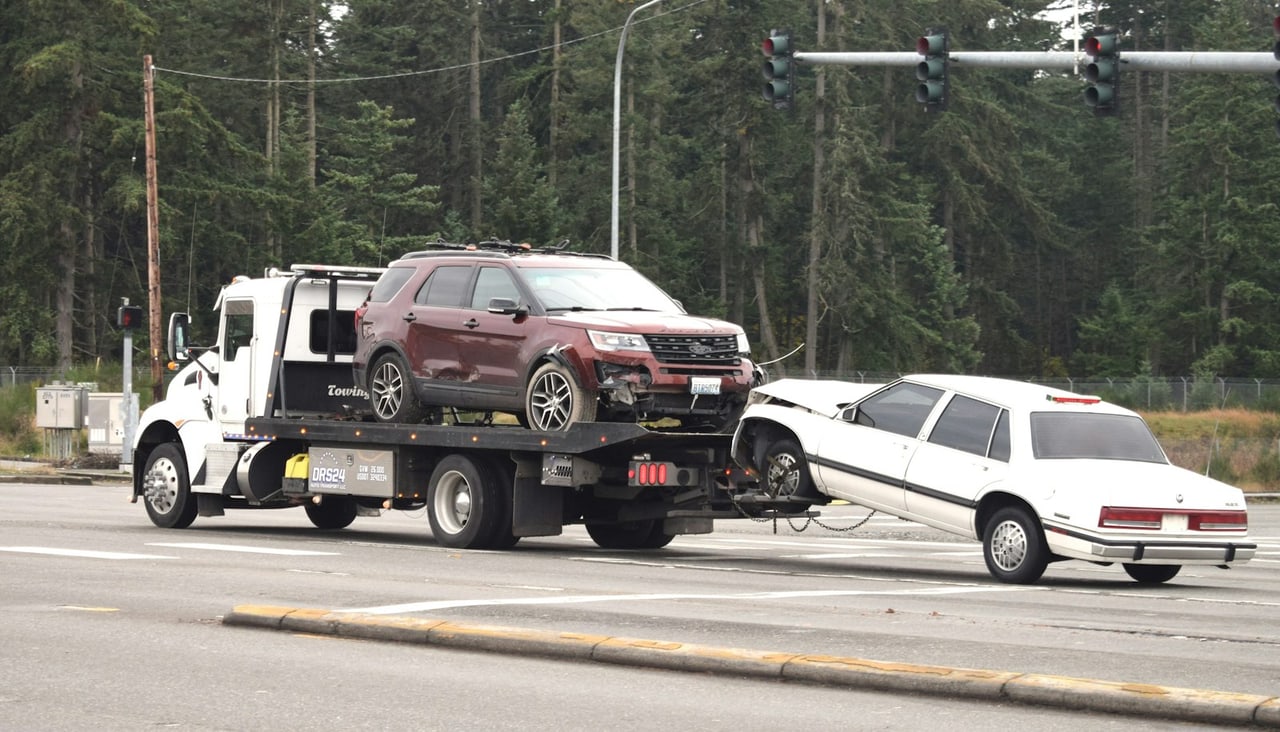
Lake County caps what a wrecker may charge to pull a car off a crash scene in its unincorporated areas at a $200 base rate plus $7 a mile, figures written into the county code and last raised by ordinance in February 2025. That ceiling is the most useful number a driver around Tavares can carry, because it separates the tows that have a legal maximum from the ones that do not. Most people go looking for it after the invoice lands. Here is what towing costs in Lake County are actually built from, where the caps stop applying, and what changes the moment you call for a truck yourself.
Lake County Sets a Maximum Towing Cost for Tows You Did Not Arrange
A nonconsensual tow is one you did not arrange, whether your car is cleared from a crash scene at an officer's direction or hauled off private property where it was parked without permission, and Section 15-7 of the Lake County Code fixes the most a company may charge for it. For a Class A vehicle, meaning anything up to 10,000 pounds gross weight, the ceiling on a public-property or accident-scene tow is a $200 base rate, $7 per mile once the vehicle is hooked, and $44 a day for outside storage. Storage does not begin the instant the truck pulls in: the code allows a six-hour grace period from delivery to the lot, then bills by a day that starts at 12:01 a.m., with any fraction counted as a full day. After 48 hours, a company that has properly executed and mailed the lien notice may add an $81 administrative fee. Billing above these figures is a violation of the ordinance rather than a disagreement about price.
Accident Tows and Trespass Tows Carry Different Numbers
The same car is capped lower coming off private property than off a public road, because the county publishes two separate schedules. A Class A trespass tow, the one that follows parking where you should not have, tops out at a $150 base rate with outside storage at $31 a day, against $200 and $44 on the public-property column. Heavier equipment climbs fast on both lists: Class B opens at $500 on public property, Class C at $812, Class D at $1,062, and a 50-ton rotator recovery bills at $1,546 an hour with a two-hour minimum. If an invoice is built on a weight class you do not believe your vehicle falls into, the brackets printed in the code are where that question gets settled.
What Shows Up on a Capped Lake County Tow Bill
- A base rate set by vehicle class: $200 for a Class A car cleared from a public road or crash scene, $150 for one removed from private property.
- Mileage charged from the moment the vehicle is hooked, starting at $7 a mile for Class A and rising with each heavier class.
- Outside storage after a six-hour grace period: $44 a day on the public-property schedule, $31 a day on the private-property one.
- An $81 administrative fee, permitted only after 48 hours of storage and only where the lien notice was properly executed and mailed.
- Hourly recovery charges when a vehicle is overturned or sitting in a position that needs special apparatus to move.
If your vehicle was towed because of a crime or civil infraction you had nothing to do with, the county code caps your towing and storage bill at $75 for the first 72 hours and requires the company to refund anything collected above that once law enforcement identifies you as an innocent owner.
Reading this from the shoulder somewhere in Tavares? Give a dispatcher the cross street and your vehicle and you will hear the number before a truck rolls.
Call Now (352) 517-5260A Tow You Call Yourself Is Priced by the Company, Not the County
Rate caps bind only the tows you did not consent to, so when you dial a wrecker yourself the price is whatever you and the company agree on, which is reason enough to ask for it before the hook goes on. Florida Statute 125.0103 requires every county to publish maximum rates for nonconsensual tows and to run a complaint process for bills that exceed them, while also letting a city adopt its own schedule that displaces the county's inside city limits; Lake County's Section 15-7 is written for the unincorporated areas, and where no local maximum is in force the rates set by the Florida Highway Patrol apply instead. Two protections travel with you either way. Under Florida Statute 715.07, reaching your car while it is being hooked on private property obliges the driver to stop and release it for no more than half the posted tow rate, and a vehicle already taken must be handed back within an hour of your request, with a detailed receipt and your right to inspect it before you accept it. That same statute limits how far it can be carried, 10 miles from the pickup point in counties of 500,000 residents or more and 15 miles in smaller ones.
Storage Fees Can Outgrow the Towing Cost Itself
Storage is the line item that turns a routine tow into a bill people argue about, because it accrues by the day whether or not anyone touches the vehicle. Lake County's code allows a six-hour grace period from the moment the car reaches the lot, then charges on a day that runs from 12:01 a.m., counting any fraction as a whole day, so a car dropped at 11 p.m. and collected at 9 a.m. can carry two of them. On the public-property and accident-scene schedule, a Class A vehicle runs $44 a day outside and $56 a day under cover; the private-property schedule sets the same two slots at $31 and $44. Heavier classes flatten out at $75 a day for Class B and $100 a day for Class C and Class D. If a trailer, vessel, or anything else on wheels came in attached to the towed vehicle, the code permits a separate daily rate for that item on top. After 48 hours, a company that has executed and mailed the lien notice required by Florida Statute 713.78 may add an $81 administrative fee, and an out-of-state records check can carry another $81 plus whatever that state charges. The clock, not the hook, is usually what drives the total.
Recovery and Equipment Charges Sit Outside the Base Tow Rate
A recovery is not a tow, and the county schedule prices it separately. When a vehicle is overturned, off an embankment, or sitting in a position that needs special apparatus to move, the code allows an hourly recovery rate matching the base rate for its class: $200 an hour for Class A on public property, $500 for Class B, $812 for Class C, $1,062 for Class D, and $1,546 an hour for a 50-ton rotator with a two-hour minimum. Labor is billed per person per hour at $62 for a laborer, $94 for a certified operator, and $156 for a supervisor. Smaller items carry their own ceilings: $94 to re-hook a vehicle that cannot leave the lot under its own power, $94 for an access or gate fee when you need into the yard outside business hours to collect personal property, $225 for a lien release, $125 for administration and dispatch support, and $100 for a tarp. Air-bag recovery runs $1,249 an hour and is capped at $4,996 in total. None of these are surcharges invented on the day; each appears in the ordinance with a number attached, which is what makes an itemized invoice worth reading line by line.
A Bill Above the Cap Is a Complaint With a Process Behind It
Charging more than Section 15-7 allows is a violation of the ordinance, and there is a published route for saying so. Florida Statute 125.0103 requires a county that sets maximum rates to post them online and to run a process for investigating fees charged above them; Lake County's version sends the complaint to the County Manager or a designee, who investigates using the procedures in Chapter 8 of the county code. If the company does not correct the violation, or denies that one occurred, the matter goes before the Lake County Code Enforcement Special Master, with the appeal rights that chapter provides. Paperwork is on your side well before it reaches that point. Florida Statute 715.07 requires any company that tows from private property and expects payment before release to file its current rates with local law enforcement and post an identical schedule at the storage site, so you can ask to see the rates your bill was built from. The same statute entitles you to a detailed signed receipt when you pay and the right to inspect the vehicle before accepting it back. Photographing the invoice and the posted schedule together is what a complaint usually turns on.
The Short Version for a Tavares Driver
Two questions decide what a tow in Lake County is allowed to cost you: did you arrange it, and where did it start. A tow you did not consent to in the unincorporated county has a published ceiling, $200 base and $7 a mile for a Class A car off a public road, $150 and $7 off private property, with storage, recovery, and administrative charges each carrying their own capped figure in Section 15-7. A tow you call yourself has no such ceiling, which makes the quote you get on the phone the only number protecting you and makes asking for it before the hook goes on worth the thirty seconds. Keep the invoice, photograph the rate schedule posted at the yard, and remember that the county code turns an overcharge into a code-enforcement matter rather than an argument you settle alone. Most drivers around Tavares will never need to open the ordinance. The ones who do tend to need it on the worst day of their month, which is the argument for reading it well before then.
Know the Number Before the Truck Arrives
Distance, vehicle class, where it is going: we go through the tow on the phone so nothing on the invoice is a surprise. Tell us where you are in Tavares or anywhere across Lake County and we will take it from there.
Call Now (352) 517-5260